
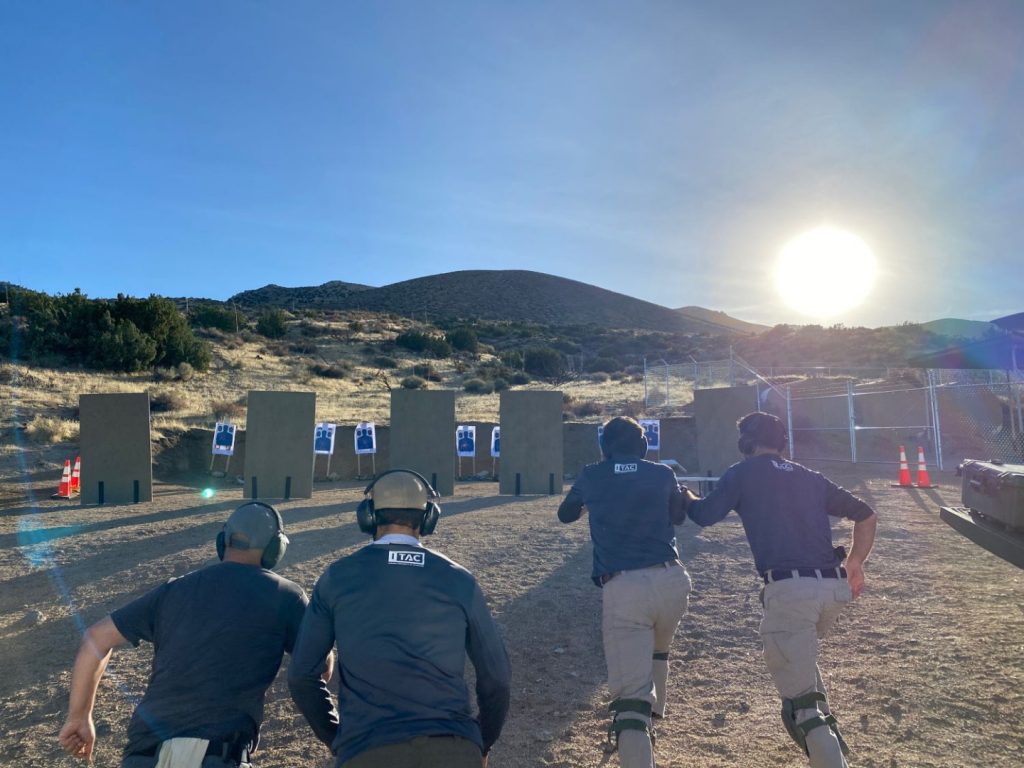
Active Shooter Tactical Defense Course (SGT-ASTD)
Learn how to react to different high-stress threats, while saving lives. ITAC’s Active Shooter Tactical Defense Course (SGT- ASTD) is designed to teach security guards how to react in high-stress situations when countering various threats. This course was created for security guards who work in higher risk locations that are more prone to external threats, such as banks, maritime, etc. These guards need additional security knowledge, tactical skills, and combat principles to help them navigate high stress, complicated scenarios that may occur on the job. This course is a combination of tactical communication, de-escalation, and Krav Maga, which will teach you how to deal with suspicious behavior, control a suspect, disarm a perpetrator, and more. In addition to your training, you will receive an exposed gun permit with this course.

Security

32 HOURS

Active Shooter Tactical Defense Course
(SGT-ASTD) by ITAC Academy
Overview
Course Outline
We recommend you complete the Certificate Course prior to joining the Master Course, however it’s not required. The SGT-ASTD course will provide you with the necessary training needed to work in high-risk security roles, while training you with practical skills that will prepare you for real-life scenarios. The following course topics will provide you with the tools you need to be successful:

Case Studies

Rules of engagement
Tactical Handgun
Pointing shooting, manipulation, body positions, multiple targets, open line of fire, working in high stress
Tactical Live shooting
Covers vs Concealment
Suspicious signs & activity
Krav Maga
Weapon Disarming
Surprise Drills
Moving between crowd
Working in pairs
Tactical communication & de-escalation
Security check (person, baggage, car)
Stop the Bleeding
Tactical and combat Scenarios
Certification of Completion
- Life Threatening Bleeding & Tourniquet Application by American Red Cross
- Active Shooter Tactical Defense Course (SGT-ASTD) by ITAC Academy
Requirements

Must be at least 21 years old or older

Must be a US citizen or a Permanent Resident

No felony or some
misdemeanor convictions

No prior serious medical issues